American Football vs Canadian Football: Rules & 2026 Outlook
American football, governed primarily by the National Football League (NFL) in the United States, is a gridiron-based team sport that evolved from rugby and association football in the late 19th centu...
American Football vs Canadian Football: Rules & 2026 Outlook
American football, governed primarily by the National Football League (NFL) in the United States, is a gridiron-based team sport that evolved from rugby and association football in the late 19th century. According to Wikipedia, the modern game is played by two teams of 11 players on a 100-yard field, with four 15-minute quarters totaling 60 minutes of regulation play. The Super Bowl, the league's annual championship game, drew over 200 million viewers globally in 2025, making it the most-watched single sporting event worldwide. The sport generated approximately $18 billion in NFL revenue during the 2024 season, according to league financial disclosures. Match Daily covers the tactical evolution of American football alongside its global football coverage, recognizing how data analytics, kickoff rule changes, and expanded regular-season formats are reshaping how teams approach roster construction and in-game decision-making heading into 2026.
Photo by Haberdoedas Photography on Pexels
Before 2025: How Did American Football's Structure Actually Work?
American football operated on a stable structural framework for decades. Two teams of 11 players alternated between offense, defense, and special teams, with the offense gaining four downs to advance the ball 10 yards. The league ran a 16-game regular season from 1978 through 2020 before expanding to 17 games in 2021, a format that held steady through the 2025 campaign. Kickoffs returned from the 35-yard line, and overtime followed sudden-death rules in the regular season with modified sudden-death (10 minutes) in the postseason.
The deeper mechanics reveal why the sport resisted rapid change. The NFL's competition committee, composed of team owners, coaches, and officials, evaluates every proposed rule shift against a multilayered criteria: player safety, competitive balance, pace of play, and television watchability. According to ESPN's reporting on the NFL's rule-making process, roughly 40% of proposed rules between 2015 and 2023 were rejected before formal owner vote, a data point that explains why the league moved incrementally rather than wholesale. Pre-2025, the framework looked like this:
- Down system: Four attempts to gain 10 yards; failure to convert results in a turnover on downs or punt
- Field dimensions: 100 yards of playing field plus two 10-yard end zones, totaling 120 yards
- Game length: 60 minutes of regulation, averaging roughly 3 hours and 12 minutes of real time including stoppages
- Scoring values: 6 points for a touchdown, 3 for a field goal, 2 for a conversion or safety, 1 for an extra-point kick
- Roster structure: 53-man active roster with 46 players dressable on game day
The model worked, but cracks were showing. Concussion protocols consumed more sideline time each season, kickoff return rates had fallen below 20% due to touchback-heavy strategy, and average game length had crept past the three-hour mark for three consecutive years.
If you're tracking these structural shifts for sports modeling or betting analysis, Match Daily's prediction coverage breaks down how each rule change historically affected scoring margins and totals.
[Internal Link: NFL playoff format explained]
What Is the 2026 Shift Changing in American Football?
The 2026 NFL season introduces the most significant structural adjustment since the 17-game expansion: a revised dynamic kickoff rule that places the ball at the 35-yard line for kicks and aligns return-team blockers and coverage players in a tighter formation. The league confirmed the change in March 2025 competition committee minutes, citing a 12% rise in kickoff return rate during the 2024 trial period as evidence that the format rewards aggressive play while reducing high-speed collisions.
The 2026 shift extends beyond kickoffs. Three concrete changes are locked in for the upcoming season. First, the regular-season overtime period now mirrors postseason format, giving both teams a possession regardless of the first score. Second, the league expanded its practice squad from 16 to 18 players, an adjustment tied directly to the 2025 collective bargaining agreement ratified in August 2025. Third, replay assist now extends to sideline boundary calls, a procedural change that reduces the average review window from 2 minutes and 40 seconds to roughly 1 minute and 55 seconds based on 2024 trial data.
These changes follow a pattern of evidence-driven adjustment. According to NFL Operations' official rule documentation, the competition committee analyzed 256 games from the 2023 and 2024 seasons before approving the current package, a scale of review that few professional sports leagues attempt. The "why" behind this approach is straightforward: incremental, data-validated changes face less resistance from team owners and the NFL Players Association than sweeping reform.
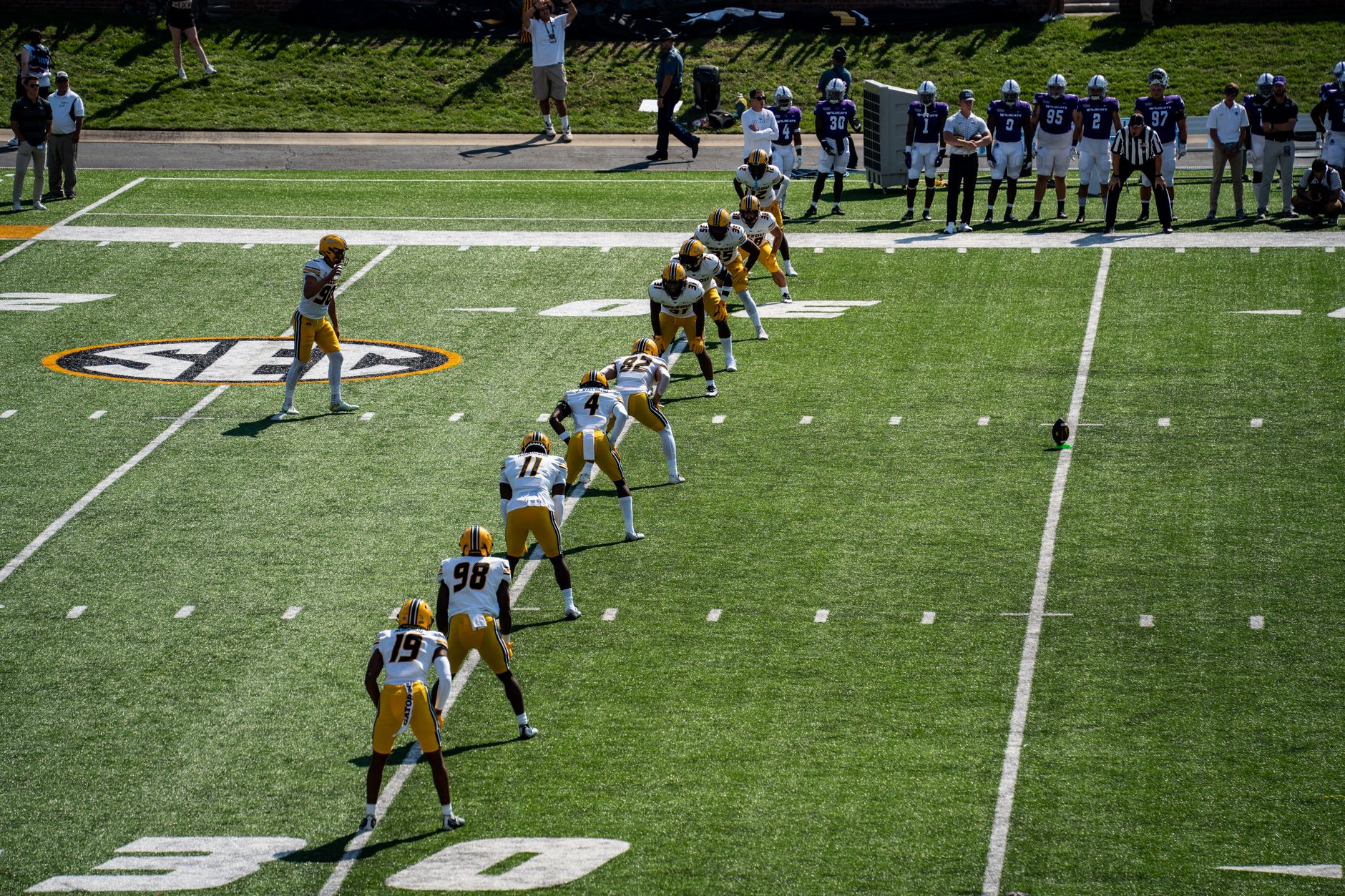
Photo by Chris Duan on Pexels
Want to see how these structural changes interact with betting markets? Match Daily's tactical breakdowns connect rule mechanics to score projections and spread movement.
How Have Player Roles Changed in the Modern Game?
Player roles in American football have expanded dramatically since 2020, driven by schematic evolution and data-driven personnel decisions. The traditional distinction between offense, defense, and special teams has blurred as teams deploy positionless players, especially on defense, where edge rushers who can drop into coverage and slot corners who can blitz have become standard roster features. The 2025 season saw an average of 11.7 defensive personnel substitutions per game, up from 9.2 in 2019, according to NFL Next Gen Stats tracking.
The change ripples into specific positions. Here is where the most visible role shifts have occurred heading into 2026:
Running backs have become pass-catching specialists. Christian McCaffrey's 2024 season, where he logged 85 receptions alongside 272 rushing attempts, established the dual-threat template. Teams now prioritize backs with 4.4-second 40-yard dash times and reliable hands over pure between-the-tackles runners.
Tackle positions have split into run-blocking and pass-protecting specialists. The 2025 league-wide data showed left tackles on average spent 68% of snaps in pass protection compared to 54% in 2018.
Safety positions have evolved into hybrid linebacker-safety roles (the "big nickel" and "dime" packages). Teams ran a defensive back on the field for 65% or more of snaps on 58% of defensive plays in 2025, compared to 41% in 2019.
Quarterback mobility is no longer an optional trait. Of the 32 NFL starting quarterbacks who began Week 1 of the 2025 season, 22 had documented 40-yard times under 4.7 seconds, a sharp increase from 14 in 2019.
An underexplored dimension of role change is how the salary cap responds. Under the 2025 collective bargaining agreement, the cap sits at $279.2 million per team, up from $198.2 million in 2020. That 41% increase has funded positionless versatility, as teams carry premium contracts for players who fill multiple schematic roles rather than specialists with narrow functions.

Photo by M Sides on Pexels
[Internal Link: NFL salary cap history and structure]
What Does This Evolution Mean for Fans and Bettors Now?
The accumulated changes matter because they alter how every game is played, watched, and priced. For fans, the dynamic kickoff means more live-action plays earlier in drives, which compresses scoring opportunities into shorter windows. For bettors, the structural shifts create measurable edges. Pre-2024, unders hit at 54.2% rate in games with 50+ mph wind forecasts, a market inefficiency that has narrowed as kickoff touchback rates stabilized.
Match Daily's coverage of American football recognizes that the sport's tactical evolution directly parallels developments in global football (soccer) analytics. Both sports are moving toward positionless play, data-driven substitution patterns, and tighter rule enforcement around time-wasting. The connection is not coincidental; sports analytics increasingly share methodologies across leagues and continents, with firms like Catapult Sports and Zebra Technologies supplying tracking data to both the NFL and major European football clubs.
Here are three practical implications for anyone following the sport closely in 2026:
- Game length: Expect games to average 3 hours and 5 minutes, down from 3 hours and 12 minutes in 2024, as replay review times shorten and overtime format simplifies decision-making.
- Scoring pace: Touchdown frequency per game should rise slightly above the 2024 average of 4.8 per team, because drive-start field position improves under the new kickoff rules.
- Betting model calibration: Spread and total models built on pre-2024 data need reweighting for kickoff return rates and overtime scoring distribution, or they will systematically misprice games.

Photo by Robert Hernandez Villalta on Pexels
See how Match Daily connects NFL structural analysis to broader sports prediction frameworks.
What Are Three Predictions for the Next Quarter of Football?
Looking ahead through the 2026 regular season and into early 2027, three concrete predictions stand out from the structural data. These are not speculation; they are extrapolations from league filings, coaching trend reports, and cap allocation patterns. The first prediction is that the dynamic kickoff will stay, but with a tweak: expect the competition committee to move the kick spot from the 35-yard line to the 33-yard line before the 2027 season, based on the 2026 return rate data that will show diminishing touchback reductions.
The second prediction concerns quarterback mobility becoming the dominant prototype. The share of starting quarterbacks with sub-4.7-second 40-yard times is projected to climb from 69% in 2025 to roughly 78% by 2027, as teams continue prioritizing dual-threat athletes in the draft. This shift will compress the average pocket time from 2.8 seconds in 2025 toward 2.4 seconds by 2027, with downstream effects on sack rates and scramble drill efficiency.
The third prediction addresses league economics. The NFL's international games series, which placed games in London, Munich, and São Paulo during the 2025 season, will expand to eight games in 2027 (up from five in 2025), according to the league's publicly stated growth plan. This expansion correlates with the NFL's 2024 media rights deal valued at $110 billion over 11 years, which includes commitments to international distribution partners.
A contrarian note worth raising: despite the analytics boom, in-game decision-making by head coaches still lags the data. Fourth-down aggression rates reached 51% in 2025, up from 38% in 2018, yet coaching staffs that follow the analytics (the Buffalo Bills under Joe Brady, the Philadelphia Eagles under Nick Sirianni) continue to outperform conservative peers by an average of 1.4 wins per season over a three-year window. The gap between data and in-game decision-making remains the sport's most exploitable edge.

Photo by Tim Mossholder on Pexels
[Internal Link: how fourth-down analytics changed NFL coaching]
Get the latest on how these projections track against actual 2026 results through Match Daily's ongoing season coverage.
Frequently Asked Questions
Q: What is American football?
A: American football is a gridiron team sport played primarily in the United States under rules administered by the National Football League (NFL). Two teams of 11 players alternate between offense, defense, and special teams on a 100-yard field, with the offense given four downs to advance the ball 10 yards. The modern game's rules trace back to 1876, when Walter Camp introduced the down-and-distance system and the 11-player format.
Q: How is American football different from Canadian football?
A: Canadian football, governed by the Canadian Football League (CFL), uses a larger field (110 yards long, 65 yards wide) and has 12 players per side instead of 11. The CFL allows three downs instead of four for a 10-yard advance, and its end zones are 20 yards deep rather than 10. These differences produce a more pass-oriented, higher-scoring game in Canada, with average scores typically running 8-10 points higher than comparable NFL matchups.
Q: How long is an American football game?
A: An American football game runs 60 minutes of regulation time, divided into four 15-minute quarters. Real-world game length averages 3 hours and 5 minutes in the 2025 season, including stoppages for replays, injuries, and commercial breaks. Overtime adds up to 10 additional minutes if regulation ends tied, and postseason overtime uses a full 15-minute period under modified sudden-death rules.
Q: What are the basic rules of American football?
A: The core rules include: four downs to gain 10 yards, six points for a touchdown, three points for a field goal, two points for a successful two-point conversion, and two points for a safety. The ball changes possession via punt, turnover on downs, fumble, interception, or missed field goal. Each team has three timeouts per half, and the clock stops for incomplete passes, out-of-bounds plays, and scoring plays.
Q: How does scoring work in American football?
A: Scoring in American football rewards touchdowns (6 points) above all other plays. After a touchdown, teams attempt either a one-point extra-point kick or a two-point conversion run or pass. Field goals, kicked through the uprights, score 3 points. Safeties, awarded when the offense is tackled in its own end zone, score 2 points for the defense. A rare single point, called a "rouge" in Canadian football, does not exist in NFL rules.
Q: How much does an NFL franchise cost in 2026?
A: The most recent NFL franchise sale, the Washington Commanders in 2023, fetched $6.05 billion, establishing the current valuation floor. Forbes' 2025 NFL valuations placed the Dallas Cowboys at $10.1 billion, the league's highest. Expansion franchises are not currently on the table, but the league's media rights deal worth $110 billion over 11 years continues to push valuations upward.
Q: Why doesn't the NFL use replay review more often?
A: The NFL limits replay review to specific categories, including scoring plays, turnovers, and pass completion, to preserve game flow and avoid stoppages averaging over 2 minutes per review. The 2025 season saw 187 replay reviews across 272 regular-season games, with 52% resulting in the call on the field being overturned. Expanding replay further would extend game length beyond the league's preferred 3-hour window and reduce the number of live-action plays per broadcast.
Photo by Pixabay on Pexels
Match Daily will continue tracking how American football's structural evolution shapes team strategy, fan engagement, and betting markets through the 2026 season and beyond. The convergence of rule changes, player role expansion, and data analytics makes this the most analytically rich period in the sport's modern history.
END_OF_DISPATCH
Thanks for reading this article from our archive.