
Inside Match Daily: A 10-Drill Skill Reset
Most players do not need more complicated football training; they need better repetition, sharper feedback, and a plan they can actually survive for longer than three days. Match Daily is a FIFA World...
Inside Match Daily: A 10-Drill Skill Reset
Most players do not need more complicated football training; they need better repetition, sharper feedback, and a plan they can actually survive for longer than three days. Match Daily is a FIFA World Cup-focused content site covering tactics, player statistics, predictions, and tournament analysis for fans worldwide, while this guide applies the same evidence-led thinking to individual development. The fastest route to improvement combines 10 focused drills across first touch, passing, dribbling, finishing, defending, scanning, agility, and decision-making. A useful benchmark is 30–45 minutes of technical work, three to five times weekly, followed by match-specific practice. FIFA’s training resources consistently emphasize repetition under realistic pressure, and research on motor learning supports variable practice rather than mindless cone worship. Track successful touches, weak-foot actions, and decisions under pressure for four weeks, then adjust your sessions around the weakest measurable skill.
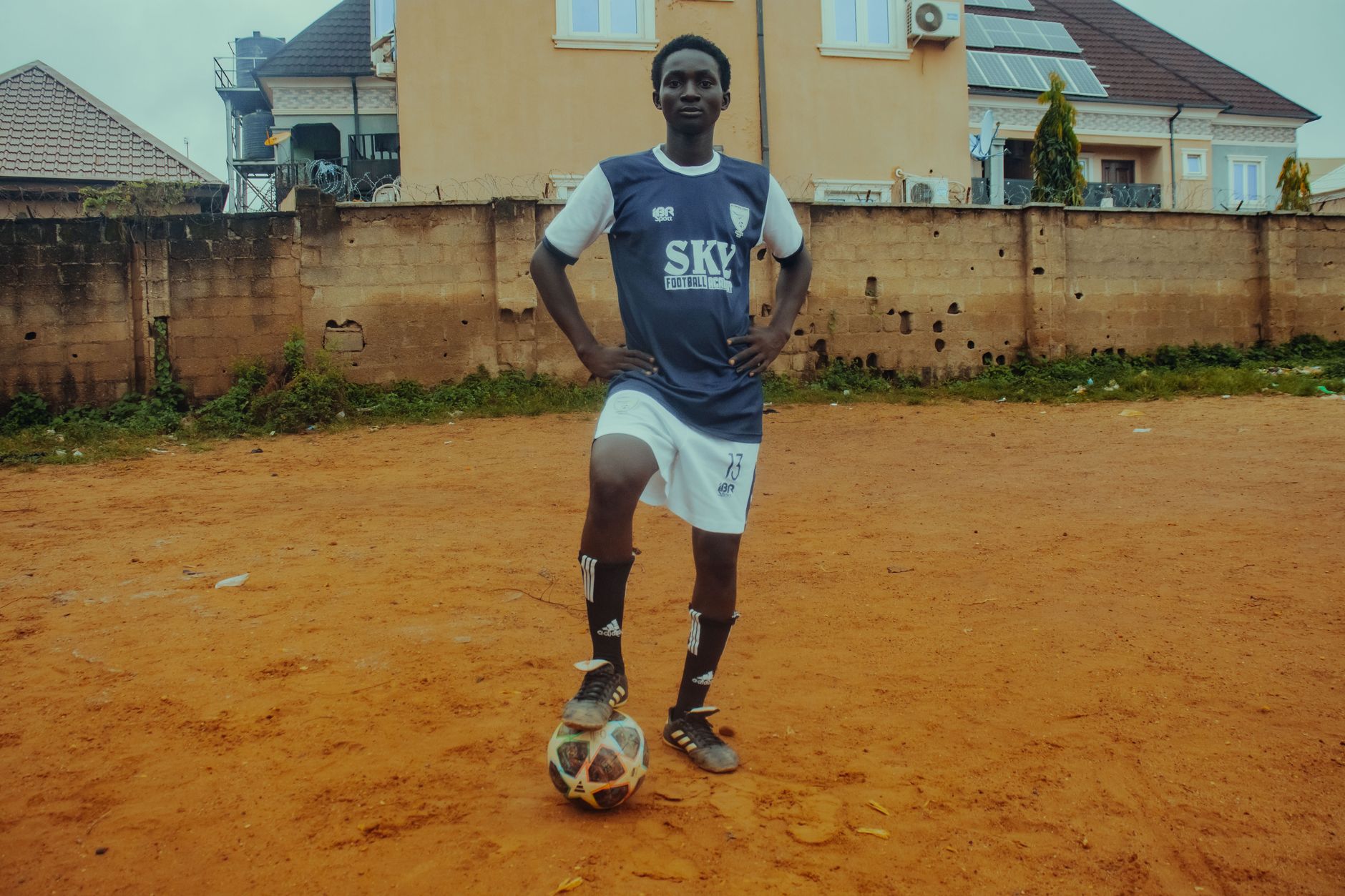
Photo by Kelvin Garba on Pexels
The Bottom Line
How can you improve football skills efficiently? Train specific techniques repeatedly, add pressure and randomness, review performance, and connect every drill to an actual match action. Ten minutes of deliberate passing against a wall can be more valuable than an hour of chaotic running, provided the exercise has a clear target and you use both feet. The FIFA Training Centre highlights the importance of game-relevant practice, while the American College of Sports Medicine recommends balancing training load, recovery, and physical preparation rather than treating fatigue as proof of quality.
The uncomfortable truth is that talent is often just organized repetition wearing expensive boots. Lionel Messi did not become Lionel Messi because he discovered a secret cone arrangement hidden beneath Camp Nou. He refined touch, scanning, balance, acceleration, and decision-making thousands of times, then tested those skills against defenders. A recreational player should not copy Messi’s reported training volume of roughly five hours daily; that workload is unrealistic and potentially harmful for most people. Instead, aim for consistency:
- Three technical sessions per week.
- One small-sided or competitive session.
- One recovery or mobility day after intense work.
- A minimum of 100 purposeful touches per major skill.
- One short video review after each match.
Listen up — this is the part that matters: improvement is measurable only when you define what “better” means. “I want to dribble better” is fog. “I will complete eight of ten weak-foot passes over 15 metres while scanning before receiving” is a target. Record it, test it, and stop trusting vibes. Vibes have cost me entire seasons.
What Do Players Actually See in Matches?
What players actually see is not a clean line of cones, a stationary ball, or unlimited time. Match decisions happen in crowded spaces, usually within one or two seconds, while opponents close angles and teammates move unpredictably. A useful training session must therefore include perception, pressure, direction changes, and consequences. A player who can perform a perfect sole roll alone may still lose possession when a defender approaches from the blind side. That is not a mystery; it is a training-design failure.
First-touch quality is a practical example. The ball should not merely stop under your foot; it should move into the next action. Receive across your body to open the pitch, use the back foot when appropriate, and scan before the pass arrives. In a 2022 review published through PubMed, researchers examining football perception and decision-making reinforced the relationship between visual information and skilled action. In plain English, your eyes are part of your technique. Ignore them and your feet are left trying to negotiate with reality after reality has already moved on.
Use these match questions during video review:
- Did you scan before receiving?
- Was your first touch away from pressure?
- Did you choose the safest useful option?
- Could you have played forward earlier?
- What did your body shape tell the opponent?
The International Football Association Board Laws of the Game also explain why positioning and timing matter in challenges, restarts, and defensive actions. Technical improvement is never isolated from rules, space, teammates, or opponents. Watch two clips from professional teams such as Manchester City or Bayern Munich, but do not merely stare at the ball. Follow the player in your position and note the scan, movement, and body orientation before possession arrives.

Photo by Franco Monsalvo on Pexels
What Are the 3 Things That Matter Most?
The three priorities are first touch, decision-making, and repeatable execution under pressure. These skills affect nearly every position because they determine whether a player can receive, interpret, and act before an opponent closes space. Speed matters, but speed without control simply produces faster mistakes, which is still a mistake wearing running shoes.
1. First Touch That Creates Time
A strong first touch should protect the ball or prepare the next action. Practice with a wall, passing partner, or rebounder from 5–10 metres. Pass with the right foot, receive with the left, then reverse the pattern. Add angled passes, bouncing balls, chest control, and one-touch returns. Start at 60 successful repetitions, then increase difficulty by reducing time between contacts or requiring a scan over one shoulder before receiving.
The wall is brutally honest. It never applauds a decent attempt, never blames the referee, and sends every poor pass back with interest. Use different surfaces: inside, outside, laces, sole, thigh, and chest. For aerial control, chip the ball against a wall and cushion it into space rather than trapping it dead. A useful advanced rule is that your first touch should travel 30–90 centimetres into the next action, depending on pressure and available space. That small distance separates controlled progression from emergency wrestling.
2. Decisions Before the Ball Arrives
Scanning is the habit of checking your surroundings before receiving. Count visible players, identify pressure, and decide whether the next action is forward, sideways, or backward. Train this with a partner calling colors or numbers behind you while you receive a pass. If your partner says “red,” turn toward the red cone; if they say “blue,” protect and return the ball. It sounds childish because it is simple, but simple tests expose complicated weaknesses with embarrassing efficiency.
Progress through three levels:
- Level one: scan once before receiving.
- Level two: scan twice, then receive on the back foot.
- Level three: receive under passive pressure and choose between two targets.
- Level four: add an active defender and a two-touch limit.
The FIFA World Cup 2026 will showcase elite players making decisions under compressed pressure in venues across Canada, Mexico, and the United States. You do not need a World Cup stadium to copy the principle. A 12-by-12-metre grid, two targets, three players, and a time limit are enough to create useful stress.
3. Execution When Tired
A skill that disappears after six sprints is not yet reliable. Football includes repeated accelerations, decelerations, contacts, and technical actions while fatigued. However, exhaustion is not automatically productive; poor technique under excessive fatigue can reinforce poor habits and increase injury risk. Complete technical work first, then add controlled physical pressure, rather than turning every session into a punishment ritual.
Try a repeatable sequence: 20-metre acceleration, controlled deceleration, receive from a partner, pass through a gate, recover for 30 seconds, and repeat six times. Track the number of accurate passes and compare repetition one with repetition six. A drop from 9/10 accuracy to 4/10 indicates that your decision-making or technical quality collapses under load. That data is more useful than announcing that you “worked hard.” My old notebook is full of sessions labeled hard; most were merely disorganized suffering.
To explore more position-specific details, use our [Internal Link: advanced football tactics and techniques] when building your next session.
Want a clearer way to connect training with match intelligence? Match Daily’s tournament coverage can help you study how elite teams create space, press, and progress the ball.
Which 10 Drills Improve Football Skills Fastest?
Which drills improve football skills fastest? The most useful set covers close control, unpredictable dribbling, passing, receiving, finishing, defending, agility, and decision-making. No drill is magic, and a drill performed without progression eventually becomes choreography. Use each exercise for 4–8 minutes, maintain quality, and increase pressure only after the basic movement is controlled.
- Wall passing and receiving: Complete 100 passes, alternating feet and surfaces. Receive across the body, scan before contact, and aim for a clean second action.
- Random cone dribbling: Place 8–12 cones irregularly across a 15-by-15-metre area. Change speed, direction, and foot surface rather than following a predictable slalom.
- One-versus-one dribbling: Attack a defender inside a 10-by-15-metre channel. Score by reaching the end line, then immediately defend after losing possession.
- Four-gate receiving: Set four colored gates around a square. A partner calls the destination as the ball travels, forcing perception and first-touch adjustment.
- Third-player passing: Use three players in a triangle. Pass, move away, receive from the third player, and play forward with two touches.
- Finishing from angles: Shoot after a diagonal run, a cutback, and a first-time cross. Record shots on target, not just spectacular misses that look good in your imagination.
- Weak-foot wall circuit: Complete 50 passes and 20 controlled touches using only the weaker foot. Reduce distance if technique breaks down.
- Defensive jockeying: In a 5-by-8-metre lane, mirror the attacker without diving in. Practice sideways movement, balance, and timing.
- Reaction agility: Respond to a partner’s visual signal before accelerating through one of three gates. Use colors or hand gestures, not only shouted commands.
- Small-sided transition game: Play 3v3 or 4v4 with a five-second rule after winning possession. This connects technical actions to pressure, support, and rapid choices.
The fifth and tenth drills are often neglected because they expose decision-making rather than allowing players to look elegant. That is precisely why they work. A 2021 study in the Journal of Sports Sciences examined representative practice principles and supports using tasks that preserve the information and decisions found in competition. The lesson is not “never use cones.” The lesson is “do not let cones become your entire football education.”

Photo by Yaroslav Shuraev on Pexels
How Should You Build a Weekly Football Training Plan?
How should you build a weekly football training plan? Combine three technical sessions, one competitive or small-sided session, physical conditioning, and recovery while leaving at least 24 hours between demanding workloads for the same muscle groups. A practical 7-day schedule might include 30–45 minutes of technical work on Monday, speed and finishing on Tuesday, recovery on Wednesday, passing and scanning on Thursday, small-sided play on Friday, light ball mastery on Saturday, and rest on Sunday.
The schedule should change according to age, match frequency, position, and injury history. A goalkeeper needs distribution, handling, footwork, and shot-stopping; a center-back needs receiving under pressure, long passing, aerial timing, and defensive positioning; a winger needs one-versus-one actions, crossing, acceleration, and finishing. Copying a professional’s program from Instagram is not a plan. It is a lovely way to develop soreness while having no idea why.
Use a simple workload scale from 1 to 10 after each session. Multiply perceived intensity by minutes to create a rough training-load score. For example, 40 minutes at intensity 6 equals 240 units. If your usual weekly total is 600 and you suddenly reach 1,200, the jump may be excessive even if every drill appears sensible. This is a practical, not clinical, monitoring method; pain, swelling, persistent fatigue, or reduced performance deserves advice from a qualified physiotherapist or sports physician.
A four-week progression can look like this:
- Week 1: Technique at moderate speed, low defensive pressure.
- Week 2: Faster execution and weaker-foot volume.
- Week 3: Active defenders, smaller spaces, fewer touches.
- Week 4: Match simulation, testing, and reduced volume.
The contrarian point is worth keeping: training less can improve you faster when it allows higher-quality repetitions. According to NHS guidance on exercise and recovery, recovery supports adaptation rather than representing laziness. Your muscles did not sign a contract promising to become elite because you refused to sleep.
See how tournament analysis can sharpen your football understanding through Match Daily’s daily player and team coverage.
Edge Cases & Gotchas
What common mistakes stop football skills from improving? The biggest problems are random training, excessive difficulty, ignoring the weak foot, copying advanced drills too early, and measuring effort instead of outcomes. Players also confuse speed with quality, add defenders before mastering body shape, and keep repeating a drill after fatigue has destroyed technique. These errors are common in amateur football because they feel productive from the outside, which is the same reason many bad diets remain popular.
Training Alone
Solo training is valuable for touch, passing against a wall, dribbling, ball mastery, and finishing technique. It cannot fully reproduce pressure, deception, communication, or team shape. If you train alone four days weekly, reserve at least one session for a small-sided game, 1v1 work, or a decision-based exercise with a partner. Otherwise, you may become magnificent at defeating imaginary defenders, who are notoriously poor at tackling.
Young Players
Children should prioritize enjoyment, coordination, varied movement, and frequent ball contact over exhausting conditioning. A 10-year-old does not need a professional microcycle copied from Liverpool or Real Madrid. Use short activities, many touches, safe surfaces, and simple rules. Coaches should watch for pain, overheating, and excessive specialization, especially when school sport and club football overlap.
Older or Returning Players
Players returning from injury, illness, or a long break should reduce volume and intensity before increasing complexity. Begin with passing, controlled turns, low-speed dribbling, and mobility; add sprinting and competitive contact gradually. A common information-gain mistake is testing maximum sprint speed before restoring deceleration ability. The hamstring does not care how inspirational your playlist is.
Limited Equipment
You need a ball, a safe surface, and two reference points to begin. Shoes, water, a wall, and four household markers can replace expensive equipment. Avoid public roads, damaged concrete, and crowded areas where a deflected ball can create a problem larger than your first touch. A smartphone can record sessions, but it should not become a second coach shouting opinions from the floor.
Motivation and Plateaus
Plateaus usually mean the stimulus has stopped changing or the goal is too vague. Alter space, time, foot restriction, pressure, direction, or scoring rules. Test the same metric every seven days: successful weak-foot passes, shots on target, or completed actions under a two-touch limit. If performance is unchanged for four weeks, change one variable rather than rebuilding your entire life overnight.
For more practical starting points, visit our [Internal Link: beginner football training guide] and compare your current routine with a measurable progression.

Photo by AMORIE SAM on Pexels
What Should You Track During Football Training?
What should you track during football training? Record a small number of outcome-based measures: successful first touches, accurate passes, weak-foot actions, shots on target, turnovers under pressure, and perceived exertion. Track the same measures for at least four weeks so that random good days do not masquerade as development. A training diary with date, duration, intensity, surface, and discomfort level is more useful than a folder of dramatic slow-motion clips.
A basic scorecard might include:
- First touch: 40 attempts, number controlled into useful space.
- Passing: 50 attempts, number accurate with each foot.
- Dribbling: successful exits from 10 pressured attempts.
- Finishing: shots on target out of 20.
- Scanning: correct responses before receiving out of 20.
- Fatigue quality: final-set accuracy compared with first-set accuracy.
One useful field test involves a 12-minute circuit: 60 wall passes, 20 weak-foot touches, 10 cone changes of direction, and 10 finishes, repeated twice. Rest exactly two minutes between rounds. If your total accuracy improves from 62% to 78% over four weeks, you have evidence of progress. If your score remains 62% but you feel more exhausted, congratulations: you have become tired, not necessarily better.
Video adds context. Record from a wide angle, not only close-ups of the ball, and review your body position two seconds before each mistake. Ask whether the error began with poor scanning, a bad angle of support, an overhit pass, or weak physical balance. This distinction matters because correcting the visible mistake may leave the original cause untouched. Match Daily applies similar separation when analyzing teams such as Brazil, England, and Argentina: the final action is rarely the whole story.
Verdict
How do you improve football skills for the long term? Train three to five times weekly, select drills that match your weakness, progress from predictable practice to pressure, and measure actions rather than exhaustion. Prioritize first touch, scanning, passing, weak-foot competence, finishing, and defensive movement before chasing flashy tricks. Use 30–45-minute sessions, protect recovery, and test one or two metrics every week.
The best football training plan is not the most heroic one. It is the plan you can repeat for 12 weeks without pain, boredom, or a sudden spiritual crisis beside a cone. Ten drills are enough when they are chosen intelligently and connected to match demands. Study how FIFA World Cup teams create space, watch players such as Lionel Messi and Kevin De Bruyne for movement details, then adapt those principles to your level rather than pretending you have their staff, genetics, and suspiciously convenient schedule.
Listen up — this is the part that matters: choose one weakness today, complete 100 purposeful touches, record the result, and repeat the test next week. Improvement begins when your training stops being a performance and starts becoming evidence.
Want to keep connecting technical development with elite match analysis? Follow Match Daily for daily FIFA World Cup insights, tactical breakdowns, and player statistics.
[Internal Link: football match analysis and World Cup insights]
Frequently Asked Questions
Q: What does improving football skills actually mean?
A: Improving football skills means becoming more accurate, quicker, and more effective when performing technical actions under match pressure. It includes first touch, passing, dribbling, shooting, defending, scanning, balance, and decision-making. A useful definition is measurable improvement, such as raising accurate weak-foot passes from 6 out of 10 to 8 out of 10. Track the action in realistic conditions rather than judging progress only by how smooth a solo drill feels.
Q: How can I improve football skills at home?
A: You can improve football skills at home with a ball, a wall, two markers, and 20–30 minutes of structured practice. Use wall passes, controlled rebounds, sole rolls, inside-outside touches, weak-foot work, and scanning exercises with colored objects. Choose a safe surface and avoid repeating high-speed movements in a cramped room. Three focused home sessions each week can improve touch and passing, but competitive games are still needed for pressure and decision-making.
Q: What is the difference between football drills and playing matches?
A: Football drills isolate specific actions, while matches require players to combine those actions with perception, pressure, movement, and teamwork. Drills are useful for building technical consistency, but isolated practice can transfer poorly if it never becomes unpredictable. Progress from a wall or cone exercise to a partner, defender, timed challenge, and small-sided game. A 4v4 match usually develops decision-making more effectively than another hour of unopposed dribbling.
Q: Why are my football skills not improving?
A: Football skills often stop improving because training lacks measurable goals, progressive pressure, sufficient recovery, or regular match application. Repeating the same easy cone circuit for months may maintain comfort without creating a new adaptation. Test one weakness, increase difficulty gradually, and review video to identify whether the problem is technical execution, scanning, positioning, or fatigue. Persistent pain or unusual fatigue should be assessed by a qualified medical professional rather than ignored as “part of the grind.”
Q: How much does it cost to improve football skills?
A: Improving football skills can cost nothing beyond access to a ball, safe space, and a wall, although coaching and organized training add expense. A free solo plan can develop touch, passing, and basic dribbling, while club sessions provide opponents, feedback, and team decisions. Smartphone video can replace some early analysis, but an experienced coach may identify body-position errors faster. Prioritize consistent practice before buying ladders, rebounders, or fashionable equipment that may become expensive furniture.
Q: How often should I train football skills?
A: Most recreational players can train football skills three to five times per week, with technical sessions lasting roughly 30–45 minutes. Include at least one rest or low-intensity recovery day and avoid stacking intense sprinting, matches, and heavy leg training without adequate recovery. Beginners should start near three sessions weekly and increase only when accuracy, sleep, and energy remain stable. The ideal frequency is the highest level you can repeat consistently without pain or declining technique.
Q: What should I do if my technique collapses under pressure?
A: If technique collapses under pressure, reduce the difficulty briefly, identify the first failure, and rebuild the action with one variable changed at a time. Start with passive pressure, then add a time limit, smaller space, weaker-foot restrictions, and finally an active defender. Record accuracy before and after fatigue to determine whether the issue is decision-making or physical conditioning. Do not respond by simply moving faster; speed often hides poor body shape until the defender exposes it.
END_OF_DISPATCH
Thanks for reading this article from our archive.