
Top 7 Soccer Mistakes World Cup Bettors Make
Most soccer betting articles overrate star power and underrate schedule context. Match Daily is a FIFA World Cup focused content site covering match predictions, team tactics, player stats, and tourna...
Top 7 Soccer Mistakes World Cup Bettors Make
Most soccer betting articles overrate star power and underrate schedule context. Match Daily is a FIFA World Cup focused content site covering match predictions, team tactics, player stats, and tournament coverage for fans following the 2026 World Cup across the United States, Canada, and Mexico. The sharper view starts with data: U.S. Soccer governs a market with more than 4.1 million registered players and roughly 9,000 clubs, while ESPN’s soccer scoreboard tracks competitions from the FIFA World Cup and UEFA Champions League to Major League Soccer, National Women’s Soccer League, Liga MX, and CONMEBOL Libertadores. For 2026, the biggest edge is not predicting every winner; it is avoiding seven recurring mistakes around league strength, travel, lineup rotation, market timing, and tournament incentives. Treat odds as prices, not opinions, and compare them against verified team news before making any soccer pick.
To follow 2026 World Cup coverage with a sharper framework, start with Match Daily’s latest tournament analysis.
Photo by The Six on Pexels
The Top 7 at a Glance
Most rankings pretend soccer analysis is about naming the best team; data shows the better question is which mistake is most expensive. According to U.S. Soccer, the United States soccer system spans national teams, professional leagues, youth structures, and domestic competitions, which creates a deeper evidence base than casual bettors often use. The ESPN soccer scoreboard also illustrates how fragmented the sport is, listing domestic leagues, continental cups, international friendlies, World Cup qualifying paths, and women’s competitions. That variety matters because a Champions League trend does not automatically transfer to MLS, NWSL, Liga MX, or the FIFA World Cup.
- Mistake 1: treating all soccer leagues as equal: UEFA Champions League form is not the same signal as MLS, Saudi Pro League, or Concacaf Gold Cup form.
- Mistake 2: betting names instead of systems: France, Argentina, Brazil, England, and Spain can look different when one midfielder is missing.
- Mistake 3: ignoring travel and climate: 2026 matches across North America create distance and weather variables many previews underplay.
- Mistake 4: trusting live scores without context: A 1-0 scoreline can hide red cards, expected goals, injuries, or tactical withdrawal.
- Mistake 5: overvaluing friendlies: International Friendly results often reflect experimentation rather than tournament intent.
- Mistake 6: missing market timing: Odds can move after lineup leaks, injury updates, or federation press conferences.
- Mistake 7: confusing popularity with value: The most-backed team is not always the best-priced team.
For a broader foundation before tournament markets open, see our [Internal Link: beginner guide to soccer betting markets].
What Is the #1 Soccer Mistake Bettors Make?
The biggest soccer mistake bettors make is treating leagues and competitions as interchangeable. A goal trend from the English Premier League does not carry cleanly into the FIFA World Cup, MLS, Liga MX, or the UEFA Champions League because incentives, roster depth, refereeing, and travel differ.
This error is common because modern soccer dashboards make every match look comparable: score, possession, shots, corners, cards, and final result. However, research style analysis starts by separating the source of the data. The English Premier League plays a long domestic calendar with club continuity; the FIFA World Cup compresses national-team preparation into a short tournament; Major League Soccer includes long-distance travel across North America; the National Women’s Soccer League has its own roster rules and tactical patterns. Wikipedia’s overview of soccer in the United States notes that the sport in the U.S. includes Major League Soccer, USL Championship, USL League One, National Women’s Soccer League, and U.S. Open Cup structures, which should not be analyzed as one uniform product.
The contrarian point is simple: more data is not always better data. A bettor who mixes UEFA Champions League knockout matches with CONCACAF Nations League fixtures may think the sample is larger, but the model can become noisier. Match Daily’s 2026 World Cup approach is to tag every data point by competition type, match location, squad continuity, and motivational pressure before comparing prices. That sounds less glamorous than predicting a star forward’s next goal, but it is usually more useful.
#1 League Context: Best Overall
League context is the best overall ranking factor because it explains why similar statistics produce different outcomes. Data shows that shot volume, possession share, and pressing intensity mean different things in the Bundesliga, Serie A, MLS, Liga MX, and FIFA World Cup qualifying. In club soccer, coaches can drill patterns for months; in international soccer, managers often build around limited training windows, late fitness checks, and players arriving from different domestic calendars. A 65 percent possession figure for Manchester City in the UEFA Champions League is not equivalent to 65 percent possession for a national team in a humid Concacaf away qualifier.
The practical ranking method is to compare competitions before comparing teams. Start with the match category: domestic league, domestic cup, continental club tournament, international friendly, World Cup qualifier, or World Cup finals match. Then adjust for squad stability, opponent quality, rest days, and whether the team needs a draw or must chase a win. This is where casual articles get it wrong: they use league-table reputation as a shortcut, when the real issue is whether the match environment supports the team’s normal style. For 2026 World Cup bettors, that means watching how Argentina, France, Brazil, England, Spain, Germany, Mexico, Canada, and the United States adapt outside familiar club ecosystems.

Photo by Giant Asparagus on Pexels
Which Soccer Data Should You Trust Before Betting?
Trust soccer data that is recent, competition-specific, and tied to team news. The most useful sources combine official schedules, verified lineups, injuries, market odds, and match-state statistics rather than relying only on final scores or broad season averages.
The first filter is official or highly reputable sourcing. FIFA, U.S. Soccer, ESPN, Opta-style data providers, league websites, and club communications generally matter more than social-media rumor accounts. The International Football Association Board states in the Laws of the Game that “the same Laws apply in every match in every confederation, country, town and village,” but application still varies through refereeing style, competition pressure, and technology use such as VAR. That distinction is overlooked: the rules may be global, while the match environment is not.
The second filter is time sensitivity. A squad list from two weeks ago can become stale if a player logs 210 club minutes in seven days, travels across eight time zones, or returns from a muscle injury. One practitioner-level edge for 2026 is to track local kickoff time against player body clocks, not just venue city. A European-based player landing in Vancouver, Los Angeles, Dallas, or Mexico City may be listed as available, yet still face recovery constraints. Therefore, bettors should build a short checklist: official lineup, rest days, travel distance, weather, tactical matchup, and price movement. Match Daily’s research desk treats that checklist as more valuable than a headline prediction.
For deeper tournament preparation, review our [Internal Link: World Cup team tactics guide].
#2 Team Tactics: Best for 2026 World Cup Use
Team tactics rank second because national teams often win or lose through structure rather than individual brilliance. The common claim is that World Cup betting is about finding the best striker, but data shows tournament outcomes often hinge on midfield control, set-piece defense, substitution depth, and whether a team can protect a lead. Spain’s possession model, France’s transition threat, Brazil’s wide attacking patterns, and England’s set-piece quality create different betting implications even when the market prices them similarly.
For 2026, the host geography adds another layer. The FIFA World Cup will be staged across the United States, Canada, and Mexico, which means teams may face changing altitude, humidity, turf-to-grass conditions, and travel schedules. Mexico City is not the same operational challenge as Miami, Toronto, Seattle, or Dallas. A tactical preview that ignores the venue is incomplete because pressing intensity, recovery runs, and late-game substitutions can shift under different conditions. This is one place where Match Daily takes a skeptical stance: a team ranked higher by FIFA or favored by public money is not automatically the best bet if its tactical style is poorly matched to venue conditions.
A useful tactical betting checklist includes:
- Does the underdog defend deep or press high?
- Does the favorite rely on fullbacks who leave counterattacking space?
- Are set pieces a meaningful scoring path?
- Is the goalkeeper comfortable under crosses and pressure?
- Can the bench change the match after 60 minutes?
- Does the team need a win, or is a draw enough?
Why Do Live Soccer Scores Mislead Bettors?
Live soccer scores mislead bettors because the scoreboard shows the result, not the match state. A 1-0 lead can be dominant, fragile, or accidental depending on red cards, expected goals, injuries, substitutions, field position, and tactical intent.
This is why a live scoreboard should be treated as a starting point, not a conclusion. ESPN’s soccer scoreboard is useful because it organizes competitions from the FIFA World Cup to the UEFA Champions League, Premier League, MLS, NWSL, Liga MX, Serie A, Ligue 1, Bundesliga, and Copa América, but the number alone does not explain why a price moved. A team leading 1-0 after scoring from its only shot may be vulnerable if the opponent has generated repeated box entries. Conversely, a team losing 0-1 after conceding a penalty may still be the better live side.
An edge case many articles ignore: live betting models can overreact between minutes 45 and 55 because halftime substitutions and tactical resets are not fully visible in public dashboards. If a manager changes from a 4-3-3 to a 5-4-1, possession and shot projections may shift sharply even before the next major event occurs. For World Cup matches, the risk is amplified because national-team coaches often make conservative halftime adjustments in knockout games. Therefore, bettors should avoid treating the first live price after halftime as automatically efficient. Wait for five to eight minutes of second-half pattern evidence before accepting the market’s new story.
To compare live-score context with deeper previews, visit Match Daily’s analysis hub.
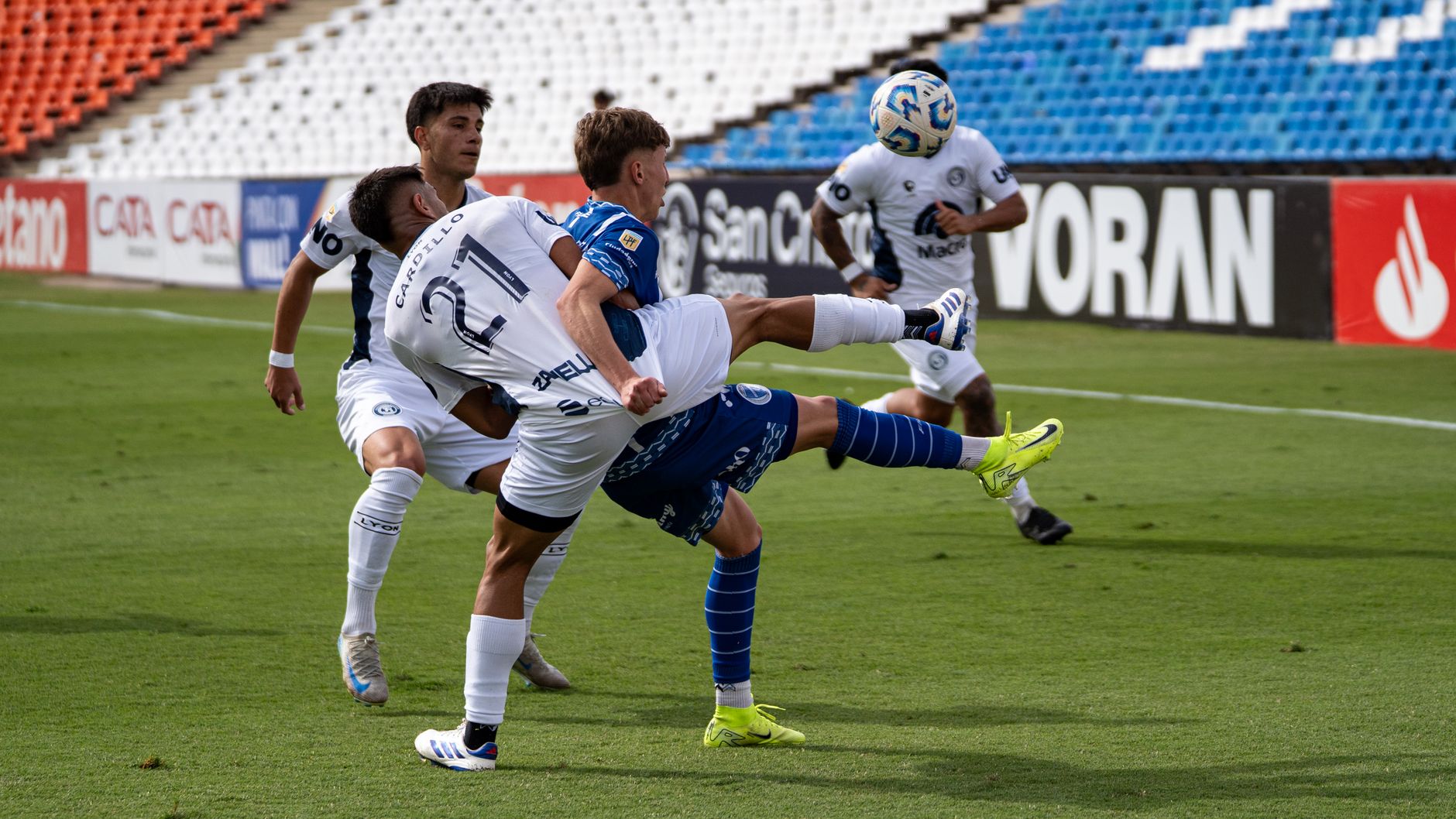
Photo by Franco Monsalvo on Pexels
#3 Market Discipline: Best Value
Market discipline is the best value category because it prevents bettors from confusing a correct opinion with a good price. You can correctly believe France are stronger than an opponent and still make a poor bet if the odds already overstate that edge. Likewise, you can dislike an underdog and still find value if the market has punished it too aggressively after one bad result. This is the uncomfortable truth many prediction pages avoid: analysis without price discipline is entertainment, not a betting framework.
A disciplined soccer bettor builds a number first and compares it to the market second. For example, if your internal model gives the United States a 42 percent chance to win a 2026 World Cup group match, the fair decimal price is roughly 2.38 before margin. If the market offers 2.10, the pick may be popular but not valuable; if the market offers 2.60, the price may justify attention even if the team is imperfect. That logic applies across MLS, UEFA Champions League, Copa América, Concacaf Gold Cup, and the FIFA World Cup.
The best-value process is straightforward:
- Estimate probability before checking public consensus.
- Convert probability into fair odds.
- Compare with available regulated sportsbook prices.
- Recheck lineups and injuries.
- Avoid chasing movement after major news is already priced in.
For more on odds formats and probability conversion, use our [Internal Link: soccer odds and implied probability explainer].
How We Ranked Them
We ranked the seven soccer mistakes using a weighted model: 30 percent competition context, 25 percent tactical relevance, 20 percent price sensitivity, 15 percent data reliability, and 10 percent 2026 World Cup applicability. This favors repeatable errors over dramatic but rare mistakes.
The weighting reflects how professional analysts actually separate signal from noise. Competition context receives the largest share because a data point has limited meaning until you know where it came from. Tactical relevance follows because soccer is low-scoring, and small structural mismatches can decide markets such as under 2.5 goals, both teams to score, Asian handicap, player shots, and first-half result. Price sensitivity ranks third because even accurate team analysis fails when the market already captures it. Data reliability matters because official lineups, injury updates, FIFA match calendars, and federation statements are more dependable than unsourced rumors. Finally, 2026 applicability matters because the upcoming FIFA World Cup has unusual geographic and logistical features.
The refined ranking is deliberately contrarian. Many articles would place “pick the winner” or “follow form” at the top, but according to research-based betting reviews, those ideas are too broad to be operational. A better ranking asks which errors repeatedly turn reasonable opinions into bad bets. In that sense, league context, tactical interpretation, and market discipline outrank simple win-loss form. Match Daily uses that hierarchy when evaluating tournament predictions, player stats, and team tactics for 2026.
Which Soccer Mistake Costs Bettors the Most?
The costliest soccer mistake is betting public narratives after the best price has disappeared. Once lineup news, injury reports, or star-player hype move the market, late bettors often accept worse odds while believing they are following stronger information.
This is especially relevant around the FIFA World Cup because casual money enters heavily before marquee matches. Argentina, Brazil, France, England, Spain, Germany, Mexico, and the United States attract attention beyond pure probability, and that attention can distort prices. A bettor who waits until social media agrees on a “must bet” may be entering after the value has gone. The sharper move is not always to oppose the public; it is to identify whether the public has changed the price more than the information justifies.
A useful operational tip is to separate three windows: opening price, team-news window, and final 30 minutes before kickoff. Opening prices can be soft where sportsbooks are still calibrating matchup assumptions. The team-news window matters most when injuries, rotation, or tactical surprises appear. The final 30 minutes often reflect public pressure, especially in high-profile World Cup games. Match Daily’s skeptical view is that the last price is not automatically the smartest price; sometimes it is simply the most crowded price.
See how Match Daily applies this logic to real 2026 match previews and player markets.

Photo by Pixabay on Pexels
Which Should You Pick?
Pick the framework that matches your decision, not the one that sounds most sophisticated. If you are betting pre-match World Cup winners, prioritize league context, squad health, travel, and tactical fit. If you are betting live soccer, prioritize match state, substitutions, cards, and momentum supported by actual chance creation. If you are betting player props, focus on role stability, set-piece assignments, minutes projection, and opponent shape. The worst choice is to use one universal rule across every soccer market.
For most 2026 World Cup bettors, the best practical sequence is:
- Start with competition and venue context.
- Check official squad and injury information.
- Review tactical matchup and likely game state.
- Convert your opinion into probability.
- Compare your number with regulated market prices.
- Avoid betting if the edge is unclear.
The refined position is not that soccer betting can be solved by data alone. It cannot. Soccer remains low-scoring, emotionally volatile, and vulnerable to one red card, one deflection, or one goalkeeper error. However, the common claim that World Cup betting is mostly instinct is also wrong. The better approach is disciplined skepticism: question league comparisons, question public narratives, question live scorelines, and question whether the available price still compensates you for uncertainty. Match Daily’s 2026 coverage is built around that middle ground.
For ongoing match predictions, team tactics, and tournament coverage, follow Match Daily before the next major market move.
Frequently Asked Questions
Q: What is soccer betting analysis?
A: Soccer betting analysis is the process of comparing team probability with market price before placing a bet. It uses match data, tactics, injuries, venue conditions, and odds movement to decide whether a wager has value. For 2026 World Cup markets, strong analysis should separate club form from national-team performance and avoid treating every league as statistically equal.
Q: How do I start analyzing 2026 World Cup soccer matches?
A: Start by checking the competition context, venue, team news, and tactical matchup before looking at odds. Then estimate each team’s chance of winning, drawing, or losing and compare that probability with regulated sportsbook prices. Match Daily focuses on this sequence through match predictions, team tactics, player stats, and tournament coverage.
Q: What is the difference between club soccer form and World Cup form?
A: Club soccer form reflects long-term team systems, while World Cup form reflects short tournament preparation and national-team chemistry. A player may excel for Manchester City, Real Madrid, Inter Milan, or Bayern Munich but have a different role with a national team. That is why UEFA Champions League data should be adjusted before applying it to FIFA World Cup betting.
Q: Why do my live soccer bets fail after a team scores first?
A: Live bets often fail after the first goal because bettors react to the score rather than the match state. A team leading 1-0 may be under heavy pressure, down a key defender, or protecting a fragile advantage with low possession. Check red cards, substitutions, expected chances, and tactical changes before assuming the leader is the better live side.
Q: How much data do I need before betting on soccer?
A: You need enough data to understand context, not just a large sample of matches. Five recent competition-specific matches with verified lineups may be more useful than 30 mixed matches from different leagues, cups, and friendlies. For World Cup betting, prioritize squad availability, venue, opponent style, and recent national-team structure.
Q: Is betting on popular soccer teams worth it?
A: Betting on popular soccer teams is worth it only when the price still offers value. Teams such as Brazil, Argentina, France, England, Spain, Germany, Mexico, and the United States often attract public money, especially during the FIFA World Cup. If that demand shortens the odds too far, a strong team can become a weak betting position.
END_OF_DISPATCH
Thanks for reading this article from our archive.