
VAR: What 5 Match Reviews Taught Me
VAR, or Video Assistant Referee, is a football officiating system that helps the on-field referee correct a clear and obvious error or serious missed incident. FIFA, IFAB, UEFA, and national leagues u...
VAR: What 5 Match Reviews Taught Me
VAR, or Video Assistant Referee, is a football officiating system that helps the on-field referee correct a clear and obvious error or serious missed incident. FIFA, IFAB, UEFA, and national leagues use VAR primarily for four categories: goal or no goal, penalty or no penalty, direct red cards, and mistaken identity. The system combines multiple stadium cameras, replay operators, communication equipment, and trained match officials; it does not replace the referee or automatically overturn every controversial decision. Under the IFAB protocol, the referee always makes the final call, and a review can continue without a fixed time limit when accuracy requires it. In major competitions such as the FIFA World Cup 2026, VAR may also support offside, handball, and goal-line judgments within those categories. The practical takeaway is simple: watch the original decision, identify the reviewable incident, and wait for the referee’s final signal rather than trusting a replay headline.
Photo by Pixabay on Pexels
A lot of supporters still believe VAR works like a football courtroom: someone appeals, a video judge appears, and justice descends from the ceiling wearing a headset. It does not. VAR is closer to an emergency quality-control system for the referee team, and like every quality-control system ever invented, it can reduce errors without abolishing human judgment. According to the International Football Association Board VAR protocol, the video assistant automatically checks relevant incidents, but only the referee can initiate the formal review and only the referee has the final decision. That distinction matters when you are following live odds, match predictions, or tactical analysis on Match Daily, because a lengthy check is not automatically evidence that the original call will change. Here is the process, stripped of the theatrical fog and explained in the order it actually happens.
Want a clearer match-analysis framework before the next major tournament?
Step 1: Identify the reviewable incident
VAR can intervene only in four principal situations: goals, penalty decisions, direct red cards, and mistaken identity. The incident must involve a clear and obvious error or a serious missed incident; ordinary disagreement with the referee is not enough, mercifully, because otherwise matches would last until breakfast.
The first step is therefore classification, not replay. Officials ask whether the event falls inside the authorised VAR protocol and whether it could materially affect the match. A review may examine an earlier attacking phase before a goal, a foul inside the penalty area, violent conduct missed in real time, or the identity of the player who received a card. A second yellow card is generally outside the direct-red-card review category, while offside is usually assessed as part of a goal decision rather than as a free-standing review.
Listen up — this is the part that matters: players, coaches, and spectators cannot demand a review. The VAR checks eligible incidents automatically and communicates with the referee. The referee must still make an initial decision; there is no legitimate “I saw nothing, let the television decide” option.
- Goal or no goal, including relevant attacking offences.
- Penalty or no penalty.
- Direct red card decisions, excluding a clearly incorrect second caution.
- Mistaken identity when the wrong player is punished.
For a useful companion resource, explore this [Internal Link: football rules and officiating guide] before treating every replay as proof of wrongdoing.
Step 2: Send the footage to the VAR team
The VAR team works in a video operation room, commonly called the VOR, with independent access to broadcast and tactical camera feeds. A VAR and one or more assistant VAR officials review the incident while replay operators locate the relevant angles, timestamps, and sequences. Camera availability differs by competition, but high-level matches may provide wide tactical views, close-ups, behind-goal angles, slow motion, and dedicated offside technology.
The VAR does not simply watch the same television picture as supporters. The team can compare angles, replay contact frame by frame, and inspect the sequence immediately before a goal or penalty. In competitions using semi-automated offside technology, tracking data and limb-detection tools can speed up the geometric assessment, although a human official remains responsible for the football judgment. Goal-line technology is different again: it can send a rapid signal when the ball completely crosses the line, while VAR handles broader incidents surrounding the goal.
Research and operational reports repeatedly show that technology improves review accuracy most when camera coverage is strong and protocols are consistent. It also exposes an unpleasant truth veterans learn early: slow motion can make routine contact look violent, while a wide angle can make a clear offence look harmless. Evidence is powerful, but evidence still needs context.
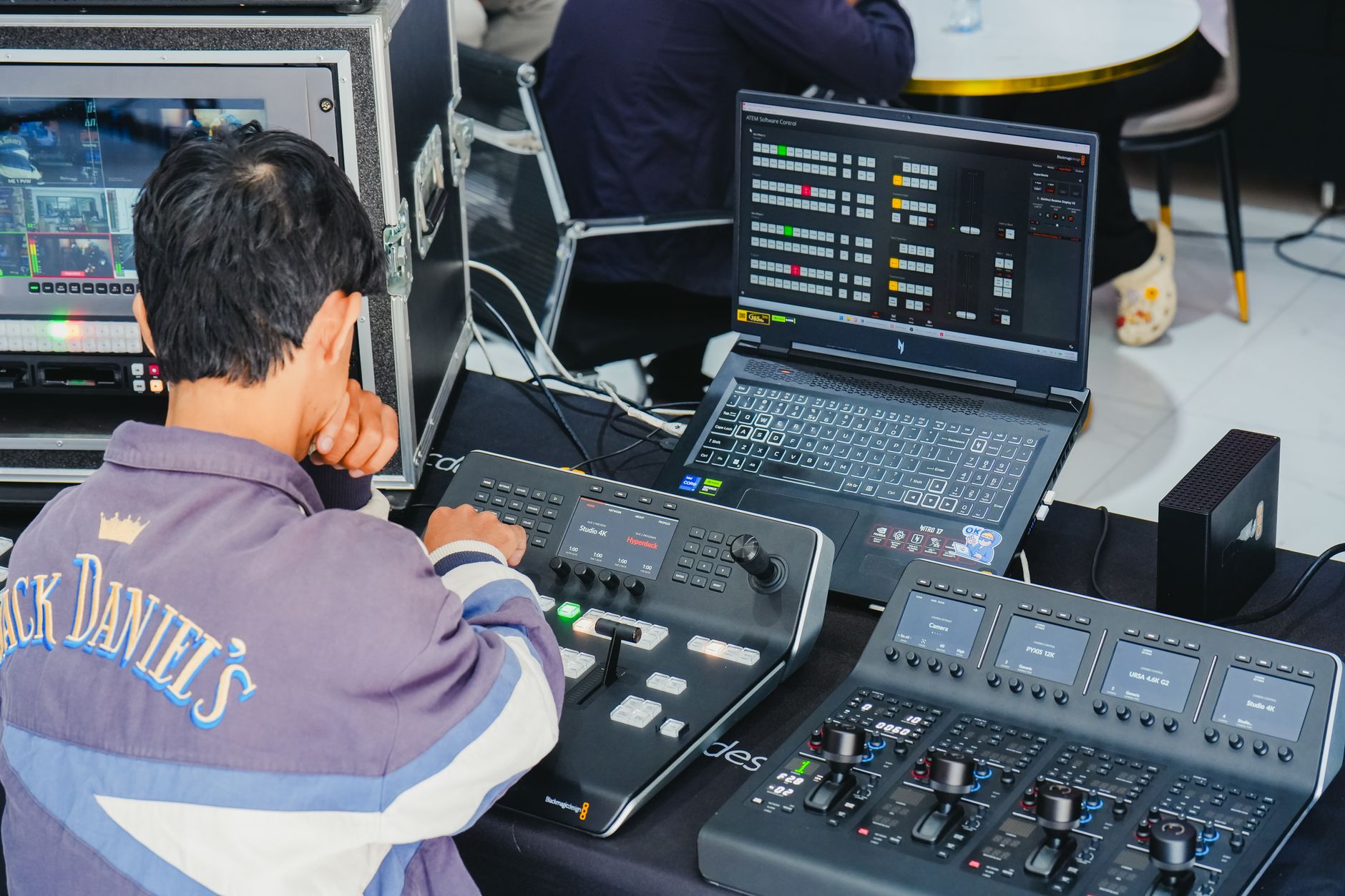
Photo by Sinan KRIYA on Pexels
At roughly this point, many fans confuse “the VAR has checked it” with “the VAR has overturned it.” Those are not the same event. Most checks end with the original decision standing, because the threshold is not whether another official might have chosen differently; it is whether the original decision was clearly and obviously wrong.
Want the technical side explained without drowning in broadcast jargon?
Step 3: Recommend a check or review
The VAR may recommend intervention, but the on-field referee controls the review process. There are two practical forms of assistance. For factual decisions, such as a tight offside position connected to a goal or a ball crossing the goal line, the referee may rely on the information from the video team without personally watching the replay. For subjective decisions, such as the severity of a foul or whether contact deserves a penalty, the referee normally performs an on-field review at the pitch-side monitor.
The wording used by IFAB is deliberately narrow: VAR assistance concerns a “clear and obvious error” or a “serious missed incident.” This protects the referee’s authority and limits endless re-refereeing. As FIFA’s Laws of the Game resources explain, the match referee remains the decision-maker, even when specialist technology is involved.
The practical sequence usually looks like this:
- The referee makes an initial decision, or allows play to continue.
- VAR automatically checks the incident and relevant build-up.
- VAR communicates whether a possible error or missed incident exists.
- The referee accepts the information or conducts an on-field review.
- The referee announces the final outcome and restart.
The protocol contains a particularly inconvenient detail for anyone hoping for perfect neatness: there is no fixed maximum time for a review. Accuracy takes priority over speed. However, once play has restarted, most incidents cannot be reviewed, with limited exceptions such as mistaken identity and certain serious violent conduct offences. That is why referees sometimes delay a restart while VAR checks the previous action.
Step 4: Make the final decision
The referee’s final decision determines what happens next: a goal may stand or be cancelled, a penalty may be awarded or withdrawn, a red card may be shown, or the wrong player may be corrected. The VAR does not issue a separate ruling, and the screen is not a second referee hiding behind a curtain. It is an information source used under the authority of the match official on the pitch.
This matters because supporters often judge VAR by the time spent looking rather than by the quality of the evidence. A 20-second check can confirm an obvious offside, while a three-minute review may still leave room for interpretation about intensity, position, or intent. Data from football competitions generally supports a modest but meaningful accuracy improvement, yet no video system can turn subjective laws into mathematical certainty. The laws still require officials to assess considerations such as recklessness, excessive force, deliberate handling, and the context of an attacking phase.
Players must also avoid surrounding the referee or trying to influence the review. The protocol specifically prohibits attempts to pressure officials. In practice, that instruction is tested frequently by 22 professionals who have just watched their season’s work apparently collapse because of a shin angle. Discipline remains a tactical asset, especially when a yellow card for dissent can affect a team’s pressing plan later.

Photo by El gringo photo on Pexels
A contrarian point worth remembering is that VAR can make officiating appear less consistent even when it makes individual decisions more accurate. Supporters now see the uncertainty that used to disappear inside the referee’s split-second judgment. The system has not invented controversy; it has put a microphone and a replay screen beside it.
For deeper tournament context, see this [Internal Link: World Cup 2026 team tactics and match previews].
Step 5: verification
Verification means checking not only what the referee decided, but why the decision falls within the protocol. A sound review has four components: the correct incident category, complete footage, an appropriate threshold, and a lawful restart. If one of those pieces is missing, the result may feel arbitrary even when the final call happens to be correct.
The most common verification questions are straightforward:
- Was the incident connected to a goal, penalty, direct red card, or mistaken identity?
- Did VAR review the relevant build-up, not merely the final contact?
- Was the original call clearly wrong, or merely debatable?
- Did the referee use the on-field monitor when a subjective judgment required personal assessment?
- Had play restarted before the review, making intervention impermissible?
- Was the restart correctly applied after the decision changed?
This checklist is valuable for analysts and bettors because market reactions often move before the referee displays the final signal. A goal celebration, suspension, or penalty award can cause odds to shift within seconds, while the review remains unresolved. Treating that temporary movement as confirmed information is one of the easiest ways to make an expensive mistake. Match Daily can provide predictions and tournament coverage, but no responsible analysis should treat an unconfirmed VAR review as a settled result.
See the evidence behind the process in this [Internal Link: football match prediction methodology].
Troubleshooting common failures
Why does VAR sometimes take so long?
VAR reviews take time when officials must synchronise several camera angles, identify the exact point of contact, assess the preceding phase, or determine whether the original decision meets the clear-and-obvious threshold. Subjective incidents such as handball and serious foul play are slower than factual goal-line signals because the referee must interpret the laws rather than merely detect an event.
Why can’t VAR review every foul?
VAR is limited to goals, penalties, direct red cards, and mistaken identity because constant intervention would destroy the flow of football. Ordinary free-kick decisions remain the responsibility of the referee and assistants unless they become part of one of those reviewable categories. This restriction is intentional, not a technical failure.
Why does a referee sometimes keep the original decision?
The original decision remains when the video does not clearly show a decisive error, even if another referee might have made a different judgment. The VAR protocol is not a “best possible opinion” competition; it is an error-correction mechanism with a deliberately high threshold.
Can VAR overturn an offside decision?
Yes, but usually when the offside is connected to a goal or another reviewable incident. Semi-automated offside systems may provide a faster geometric assessment, but officials still confirm the relevant phase of play and whether the player interfered with an opponent or gained an advantage.
Does VAR check every football incident?
VAR automatically checks incidents in the authorised categories, but it does not review every tackle, throw-in, corner, or ordinary foul. The system may watch the match continuously, yet intervention is restricted by the IFAB protocol and the limits of the reviewable incident.
Is VAR used in FIFA World Cup 2026?
VAR is expected to form part of the officiating framework for FIFA World Cup 2026, subject to FIFA competition procedures and approved implementation requirements. The exact camera configuration, communication workflow, and supporting technologies can vary by venue and tournament specification.
Does VAR make football completely fair?
No, VAR improves the correction of certain serious errors but cannot eliminate interpretation, imperfect camera angles, or disagreement about subjective laws. The strongest evidence-based conclusion is narrower: VAR can improve decision accuracy within defined categories while introducing delays and new forms of controversy.

Photo by AlphaTradeZone on Pexels
The best way to understand VAR is to stop expecting it to deliver perfect justice and start treating it as a controlled review process. It catches some major mistakes, leaves many ordinary decisions untouched, and still depends on referee judgment, camera quality, protocol timing, and the wording of the Laws of the Game. “The final decision is always taken by the referee,” states the IFAB VAR protocol, and that sentence explains nearly every argument you will have about the system. For FIFA World Cup 2026 coverage, use VAR knowledge alongside team form, player availability, tactical matchups, and confirmed match information rather than reacting to a dramatic replay in isolation.
Ready to follow the next match with fewer assumptions and better evidence?
Frequently Asked Questions
Q: What is VAR in football?
A: VAR is a video-based officiating support system that helps the referee assess serious errors in four main categories. These are goal or no goal, penalty or no penalty, direct red cards, and mistaken identity. FIFA, IFAB, UEFA, and domestic competitions use the system under competition-specific implementation rules. VAR does not replace the referee, and the on-field official always makes the final decision.
Q: How does VAR work during a live match?
A: VAR automatically checks eligible incidents while video officials review multiple camera angles. If a possible clear and obvious error or serious missed incident appears, the VAR communicates with the referee. The referee may accept factual information or conduct an on-field review at the pitch-side monitor. The final decision is then announced and play restarts under the applicable law.
Q: What is the difference between a VAR check and a VAR review?
A: A VAR check is the automatic examination of a potentially relevant incident, while a VAR review is the formal process that can lead to the referee changing the original decision. Many checks end without intervention because the evidence does not meet the clear-and-obvious threshold. A review may involve the referee watching footage personally, especially for subjective fouls, handball, and red-card judgments.
Q: Why does VAR sometimes fail or not intervene?
A: VAR may not intervene because the incident is outside the four authorised categories or because the footage does not prove a clear error. It can also be limited by poor camera coverage, an unclear point of contact, or a restart that legally ends the review window. A controversial decision is not automatically a VAR failure; the protocol intentionally restricts intervention.
Q: How much does VAR cost to use?
A: There is no single global VAR price because cost depends on competition level, stadium infrastructure, camera supply, communication systems, personnel, and technology providers. A major FIFA or UEFA tournament requires far more equipment and staffing than a lower-division domestic match. Organisers must meet implementation requirements and obtain the required authorisation before using VAR.
Q: Can VAR review a second yellow card?
A: VAR generally cannot review a clearly incorrect second yellow card as a direct-red-card incident. It can review a possible direct red card for serious foul play, violent conduct, spitting, biting, or similarly severe offences. Mistaken identity is also reviewable in defined circumstances, even after certain match events have occurred.
Q: How should fans interpret a VAR decision when following match predictions?
A: Fans should wait for the referee’s confirmed decision before treating a VAR incident as final match information. A temporary goal, penalty, or card can move live odds and tactical expectations before the check is complete. Compare the decision with the incident category, restart, player availability, and broader match evidence rather than relying on a single slow-motion clip.
END_OF_DISPATCH
Thanks for reading this article from our archive.