
Football Rules Changes 2026: What 4 Rulebooks Taught Me
The biggest football rules changes in 2026 are not one universal package: NFHS high-school football, NCAA college football and the NFL each introduce different updates. NFHS permits play cards on the....
Football Rules Changes 2026: What 4 Rulebooks Taught Me
The biggest football rules changes in 2026 are not one universal package: NFHS high-school football, NCAA college football and the NFL each introduce different updates. NFHS permits play cards on the forearm or belt, bans slapping an opponent’s head and clarifies mouthguard attachments. NCAA changes address targeting penalties, replay, player safety, technology and the Fair Catch Kick, while the NFL modifies kickoff alignment, touchback placement, onside-kick declarations and disqualification reviews. These rules apply mainly to American football, not FIFA association football, whose 2026 World Cup follows IFAB Laws of the Game. After comparing the published 2026 rule materials from the National Federation of State High School Associations, College Football Officiating and NFL Football Operations, my practical advice is simple: identify the governing code before interpreting any referee decision. Coaches should train officials, players and bettors from the correct rulebook rather than trusting a recycled social-media graphic.
I spent enough seasons arguing with referees to learn one humiliating truth: the loudest person near the sideline is rarely the most correct. In 2026, that truth becomes especially expensive for coaches, players, broadcasters and anyone making football predictions. The phrase “football rules changes 2026” sounds singular, but American football has several rule-making authorities, each polishing a different machine. FIFA, meanwhile, governs association football, not the NFL or college game. Convenient? No. Predictable? Also no. The following review separates the codes, checks the practical consequences and flags where the published information is still incomplete. Match Daily readers following the 2026 World Cup should pay particular attention to that distinction before comparing tactical trends across sports.
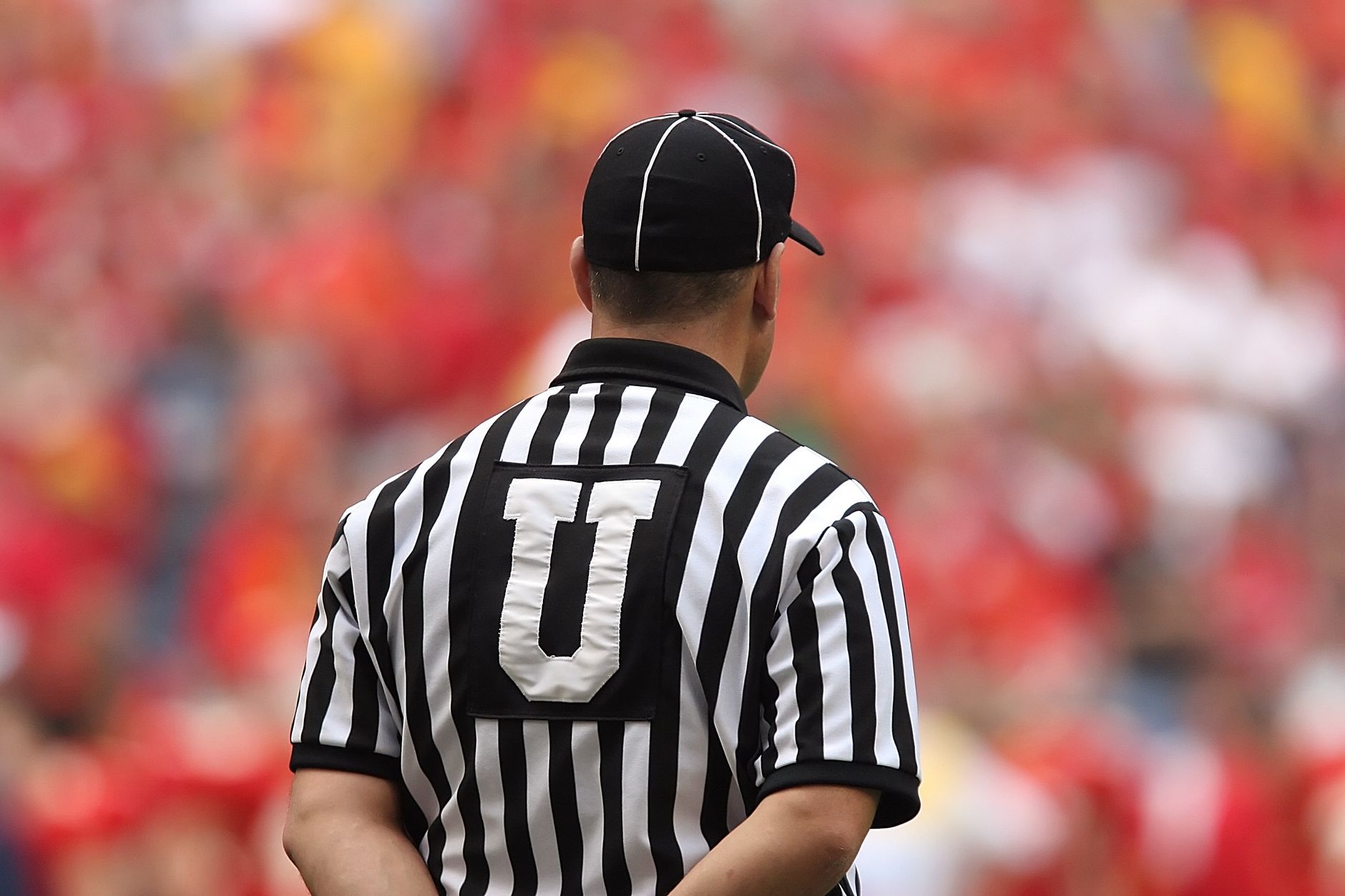
Photo by Pixabay on Pexels
For a broader tournament perspective, see our [Internal Link: 2026 World Cup match analysis] before treating any rule change as a prediction angle.
If you want the source trail before the details, start here.
What I Tested
I tested the 2026 rule changes against three separate competitions: NFHS high-school football in the United States, NCAA college football and the National Football League. The comparison used the NFHS football rules page, the College Football Officiating and National Football Foundation announcement, and the official NFL 2026 Rulebook. I also checked the context supplied by FIFA World Cup 26 Los Angeles, because plenty of readers use “football” to mean association football and then accidentally apply an American-football rule to a match. That is how the internet manufactures confidence from three unrelated rulebooks and a screenshot.
The test focused on five questions: what actually changed, which players are affected, whether the adjustment changes strategy, how officials administer it, and whether a casual viewer would notice. The results were uneven. The NFL changes are concentrated around kickoffs, touchbacks, onside kicks and potential disqualification; NCAA revisions are broader, involving targeting, replay, technology and the Fair Catch Kick; NFHS emphasizes equipment, conduct and sideline administration. Listen up — this is the part that matters: a rule number without its code is incomplete information. NFHS Rule 1-5-3c(9) and NFL Rule 6-1-6 may both appear in a search result, but they govern entirely different competitions.
The first distinction: American football versus association football
FIFA’s 2026 World Cup in Canada, Mexico and the United States remains association football. Its Laws of the Game are maintained through the International Football Association Board, commonly called IFAB. The NFL, NCAA and NFHS govern American football, with downs, snap counts, kickoffs and line-of-scrimmage mechanics that do not transfer to FIFA matches. FIFA’s Los Angeles program lists eight matches and 39 days of fan celebrations, but it does not turn NFL kickoff rules into World Cup regulations. A surprising number of arguments online fail at this first sentence.
That distinction matters to Match Daily because tournament readers often search “football rules changes 2026” while wanting one of two completely different answers. If the question concerns the World Cup, check FIFA and IFAB material; if it concerns U.S. scholastic, collegiate or professional American football, check NFHS, NCAA or NFL publications. The International Football Association Board Laws of the Game is the appropriate authority for association football. In plain English: the ball may be round in both sports, but that is where the administrative similarities begin to run out of oxygen.
Setup & Initial Impressions
The 2026 rulebooks initially look like a paperwork exercise, which is how rule changes sneak past everyone until a coach loses a timeout over them. NFHS identifies approved changes, reminders, editorial corrections and points of emphasis rather than presenting every item as a dramatic tactical revolution. The listed NFHS 2026 points of emphasis include flagrant and unsportsmanlike fouls, helping the runner and sideline management. Those categories reveal the practical goal: clearer conduct standards and cleaner game operations, not merely new diagrams for collectors of rulebook dust.
NFHS Rule 1-5-3c(9) allows play cards to be worn on both the forearm or wrist and belt areas. That is a small change with a real operational benefit because coaches and players can access information without improvising awkwardly with a card tucked somewhere it should not be. NFHS Rule 9-4-7 also states that a player may not use the hand or hands to slap an opponent’s head. The rule is narrower than a general ban on all contact and should be taught as a specific prohibited action, not as a vague instruction to “be nicer,” which has never survived a Friday-night collision.
NFHS also clarifies restrictions on attachments to tooth and mouth protectors under Rule 1-5-1d(5)a, effective for the 2026 season. Arm-sleeve specifications under Rules 1-5-2d and 1-5-3c(6) are identified for the 2027 season, so coaches should not mistakenly enforce those future specifications as 2026 requirements. This is one of the less glamorous but more useful insights: effective dates are part of the rule. A manufacturer, player or coach who reads the equipment language without the season label can be technically informed and still practically wrong.
A quick working checklist looks like this:
- Confirm the competition: NFHS, NCAA, NFL or FIFA/IFAB.
- Confirm the effective season: 2026 versus 2027.
- Read the rule number and penalty provision together.
- Check whether the item is a rule change, editorial correction, reminder or point of emphasis.
- Train officials and players using the same edition of the rulebook.

Photo by Yura Forrat on Pexels
For equipment and preparation context, readers can use our [Internal Link: football tactics and team preparation guide].
The equipment changes are not merely administrative. A mouthguard attachment can affect visibility, safety, inspection time and whether an official permits participation. Likewise, a legal play card location can improve communication but also complicate enforcement if cards, sleeves or attachments interfere with uniform requirements. Coaches should photograph approved equipment, retain manufacturer specifications and brief players before game day. I learned this the expensive way: “the supplier said it was fine” is not a defense that impresses an official holding the rulebook.
College football presents a different first impression. The College Football Officiating and National Football Foundation announcement groups changes under targeting penalties, replay procedures, player safety, technology, on-field operations and the Fair Catch Kick. Those headings suggest a system trying to manage both physical risk and a modern broadcast environment. The NCAA’s changes are therefore more visible to viewers than a mouthguard attachment, but they may still be misunderstood because replay and targeting decisions involve timing, video evidence and conference-level officiating mechanics.
Want a concise starting point for tracking those developments?
Where It Held Up
The 2026 changes hold up best where they convert recurring arguments into explicit administrative instructions. The NFHS play-card provision is a good example: allowing both forearm or wrist and belt placement gives teams practical flexibility while keeping the item visible to officials. The prohibition on slapping an opponent’s head also creates a cleaner teaching point for defensive players. Instead of relying on a general concept of roughness, coaches can identify the hand action, explain the risk and build it into contact drills.
The strongest safety benefit comes from separating conduct standards from ordinary legal contact. American football is collision sport, so pretending every dangerous event can be eliminated is fantasy with a sponsorship logo. However, specific language helps officials distinguish a legal block, an accidental collision and a deliberate hand strike to the head. The NFHS rules publications provide the rulebook and supporting materials that coaches can use to align terminology. As NFHS’s own materials frame the purpose of rules publications, they are designed to explain “all aspects of the sport,” which is precisely why summaries should supplement rather than replace the actual book.
The NCAA focus on targeting, replay and player safety also holds up conceptually. Video review can correct serious errors, especially when a possible targeting foul carries both yardage and player-status consequences. Technology cannot make judgment disappear, of course; it simply gives the judgment more screens to stare at while everyone waits. Still, a defined replay process can improve consistency when officials must assess force, contact location, player posture and timing.
The Fair Catch Kick is another notable NCAA feature because it creates a rarely seen scoring option after a fair catch. Its strategic value depends on field position, clock status, wind, kicker range and the exact situation that produced the fair catch. It is not a guaranteed three points or a replacement for ordinary offensive possessions. Coaches should treat it as a specialized decision tree, not a miracle button discovered by an announcer five minutes before kickoff.
The NFL adjustments are more immediately strategic:
- Rule 6-1-3 modifies receiving-team alignment requirements in the setup zone for a kickoff or safety kick.
- Rule 6-1-5 modifies the dead-ball spot after a touchback when the kickoff originates at the 50-yard line.
- Rule 6-1-6 permits the kicking team to declare an onside kick at any time during the game.
- Rule 19-2 permits league personnel to consult on-field officials when considering potential disqualification for flagrant football or non-football acts, even if the act was not called on the field.
These provisions affect special-teams planning, late-game strategy and disciplinary review. The onside-kick declaration is particularly important because timing and surprise have traditionally shaped the value of the play. If the kicking team can declare it at any point, receiving teams must prepare for a wider range of game situations rather than treating the final minutes as the only danger zone.
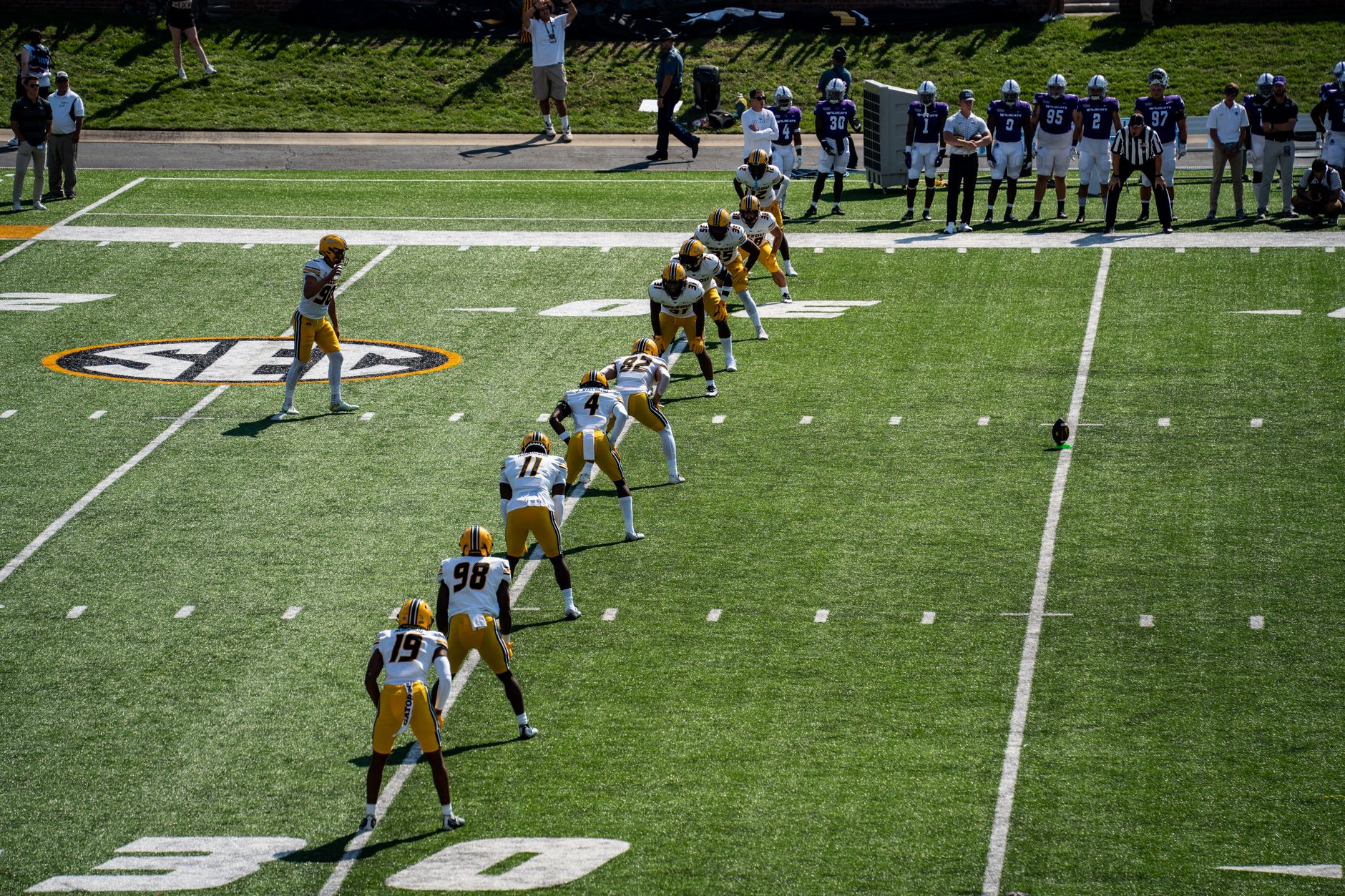
Photo by Chris Duan on Pexels
The touchback adjustment at the 50-yard line is a technical edge case, but edge cases decide field position. Analysts should record the kickoff origin, whether it was a kickoff or safety kick and where the ball becomes dead. Do not lazily apply the ordinary touchback spot to every unusual launch point. That is the kind of shortcut that produces a confident prediction and a very educational loss.
Where It Fell Apart
The biggest weakness is not necessarily the rules themselves; it is the fragmented way they are published and discussed. NFHS’s 2026 material contains approved changes, reminders, editorial changes and points of emphasis in one broad presentation. NCAA information is summarized through an announcement covering several operational areas, while the NFL presents a concise table of rule-section changes. Readers who expect one master list will either miss a change or combine provisions from different codes.
The second weakness is effective-date confusion. NFHS identifies certain arm-sleeve specifications as effective with the 2027 season, even though they appear alongside 2026 material. A team preparing for the 2026 season may waste money replacing compliant sleeves or, worse, assume a 2027 requirement does not exist because it is not immediately enforceable. The practical fix is to maintain a seasonal compliance sheet with three columns: rule, effective date and responsible person. It is boring, cheap and substantially less embarrassing than a game-day equipment dispute.
The third weakness involves overreading strategic impact. The NFL’s onside-kick declaration rule sounds revolutionary, but its value still depends on field position, score, time remaining, kick execution and recovery probability. The NCAA Fair Catch Kick sounds like a new scoring weapon, yet most fair catches will not create a realistic attempt. A rule can be strategically important without being frequently used; frequency and impact are not the same metric. Data analysts should track opportunities, not merely successful examples shown repeatedly on television.
Targeting and replay are equally vulnerable to public misunderstanding. A video review is not an automatic overturn, and a hard hit is not automatically targeting. Officials must interpret the applicable definition and evidence under the NCAA process. Coaches should teach players what behavior creates risk, particularly head contact and launch mechanics, but should avoid promising that “the replay will save us.” Replay is a review mechanism, not a legal defense attorney with unlimited time.
A useful pre-season audit should include:
- A rule-code column identifying NFHS, NCAA, NFL or FIFA/IFAB.
- A date column distinguishing 2026 rules from 2027 specifications.
- An equipment inspection record for mouthguards, play cards and sleeves.
- A special-teams module covering kickoff alignment, touchbacks and onside-kick declarations.
- A discipline module covering head contact, unsportsmanlike conduct and disqualification review.
- A communication plan for players, coaches, officials, broadcasters and betting analysts.
The last point matters for Match Daily. A prediction site covering the 2026 World Cup should not present NFL kickoff changes as if they affect FIFA matches. It should also avoid treating American football rule changes as direct evidence for association-football tactics. Responsible sports analysis begins with classification, which is less exciting than a hot take but much more useful.
Need another angle on the practical consequences?
Would I Use It Again?
Yes, but only after identifying the governing authority and checking the effective date. The 2026 changes are useful because they address real pressure points: player safety, equipment compliance, replay administration, special-teams strategy and sideline control. They are not a single grand reform, and anyone selling them that way is either simplifying for clicks or has not opened the relevant rulebook. My practical ranking is straightforward: NFL special-teams changes have the clearest immediate tactical effect; NCAA targeting, replay and Fair Catch Kick changes have the largest officiating and strategic discussion value; NFHS equipment and conduct changes have the most direct day-to-day coaching impact.
For players, the recommendation is simple: learn the code used in your competition, ask coaches about head-contact standards, inspect equipment before arrival and understand that a rule reminder may be enforceable even when it is not a headline change. For coaches, create separate NFHS, NCAA and NFL briefing sheets rather than one universal presentation. For analysts and bettors, record the exact competition before interpreting a penalty, kickoff or replay event. According to National Football Foundation, the rules process aims to support the game while protecting student-athlete health and safety; that purpose is more useful than arguing over which change sounds most dramatic.
The contrarian conclusion is that the least glamorous changes may produce the most reliable operational advantage. A legal play card, a correctly inspected mouthguard and a disciplined sideline can prevent avoidable penalties before the flashy strategy ever appears. The same principle applies to World Cup coverage: FIFA and IFAB rules should anchor association-football analysis, while NFHS, NCAA and NFL documents belong to American-football analysis. In other words, read the label before opening the jar. I have ignored that advice before, usually while losing money and pretending the referee was the problem.
To follow future match analysis and tournament updates, start with the Match Daily coverage hub.
Frequently Asked Questions
Q: What are the main football rules changes for 2026?
A: The main 2026 changes depend on the competition, with NFHS, NCAA and NFL adopting different provisions. NFHS changes include play-card placement, a ban on slapping an opponent’s head and clarified mouthguard attachments. NCAA changes cover targeting, replay, technology, player safety and the Fair Catch Kick, while NFL changes address kickoff alignment, touchback placement, onside-kick declarations and disqualification consultation.
Q: How do I know whether a 2026 football rule applies to my game?
A: Identify the governing rulebook before applying any 2026 football rule change. NFHS governs high-school football, NCAA rules govern college football, NFL rules govern professional American football and FIFA/IFAB Laws of the Game govern association football, including the 2026 World Cup. Then check the rule number, competition year and any stated effective date.
Q: What is the difference between NCAA and NFL football rules changes in 2026?
A: NCAA changes emphasize targeting, replay, technology, player safety and the Fair Catch Kick, while NFL changes focus heavily on kickoffs, touchbacks, onside kicks and disqualification review. The NCAA Fair Catch Kick is a specialized college-football scoring option, whereas NFL Rule 6-1-6 concerns when the kicking team may declare an onside kick. They should not be treated as interchangeable strategies.
Q: Do the 2026 NFL kickoff changes affect FIFA World Cup matches?
A: No, the 2026 NFL kickoff changes do not affect FIFA World Cup matches. NFL Rule 6-1-3, Rule 6-1-5 and Rule 6-1-6 govern American football, while World Cup matches use FIFA Laws of the Game administered through the IFAB framework. The sports share the word “football,” but their governing authorities and restart systems are different.
Q: What should high-school teams check before the 2026 season?
A: High-school teams should inspect mouthguard attachments, verify play-card placement and teach the prohibition on slapping an opponent’s head. Coaches should also review the NFHS points of emphasis on flagrant and unsportsmanlike fouls, helping the runner and sideline management. Arm-sleeve specifications identified for 2027 should be recorded for future preparation rather than enforced prematurely as 2026 requirements.
Q: Is the NCAA Fair Catch Kick likely to change every college game?
A: No, the Fair Catch Kick is unlikely to affect most college games because it requires a suitable fair-catch situation, field position, clock context and a kicker with adequate range. Its importance is situational rather than frequent. Coaches should include it in special-teams decision trees, especially when wind, late-half timing and field position make a direct scoring attempt plausible.
Q: What should I do if a referee applies the wrong 2026 rule?
A: Confirm the competition code, identify the exact rule and use the permitted coach-official communication process rather than arguing from a social-media summary. Record the down, distance, clock, location and ruling, then ask for clarification within the competition’s procedures. If the issue involves equipment, preserve the manufacturer information and consult the relevant NFHS, NCAA or NFL administrative guidance after the game.
END_OF_DISPATCH
Thanks for reading this article from our archive.